Indoor Cat Enrichment: DIY Toys, Play Routines & Home
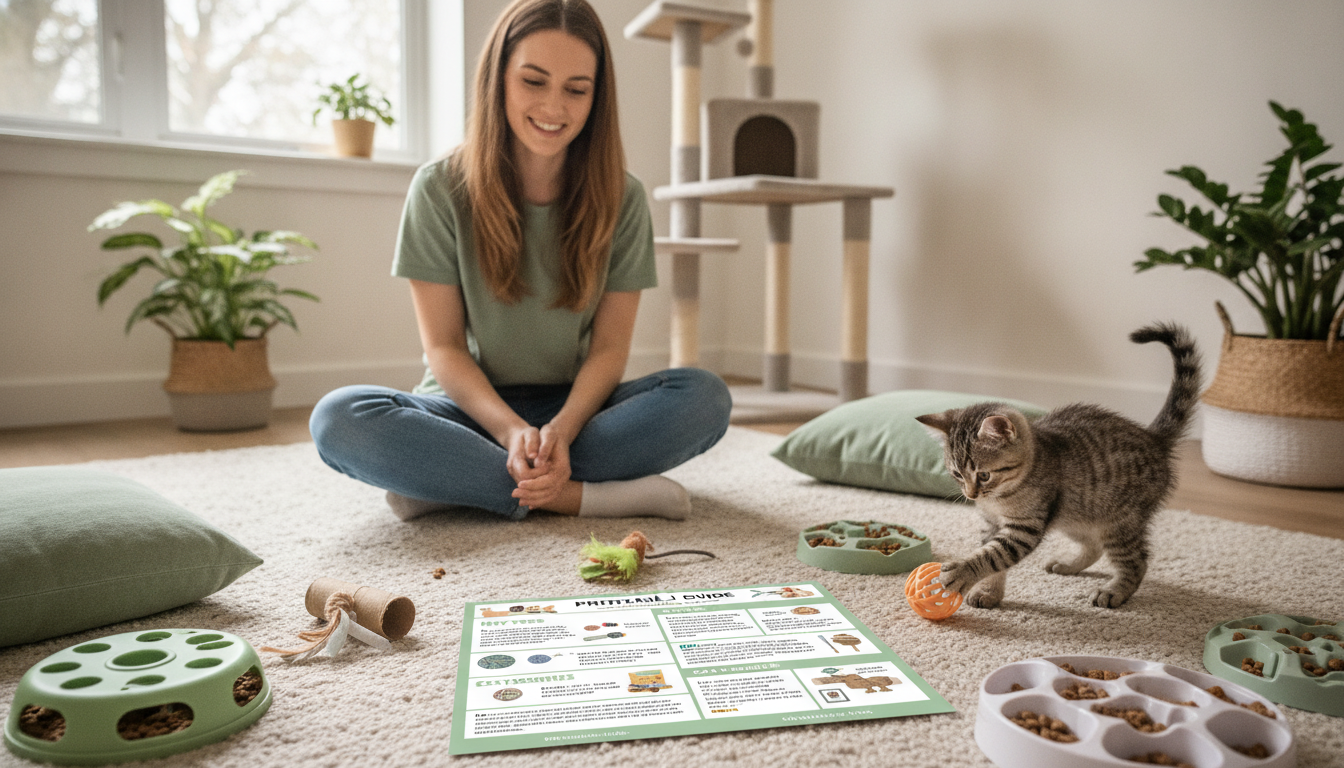
Enrichment Ideas for Indoor Cats: DIY Toys, Daily Play Routines, and Cat-Friendly Home Tips
Indoor cats thrive when their day includes hunting-style play, problem-solving, and cozy spaces to climb, scratch, and observe. A simple plan—rotating toys, adding food puzzles, and setting up a few “yes zones” around the home—can reduce boredom behaviors and support healthy movement, confidence, and calm.
What indoor enrichment means (and why it works)
Enrichment is anything that helps an indoor cat express natural behaviors in safe, home-friendly ways. The goal isn’t constant stimulation—it’s giving your cat regular chances to “be a cat” throughout the day.
- Cover the core needs: hunt, climb, scratch, chew, hide, watch, and rest.
- Mix types of enrichment: physical (movement), mental (puzzles), sensory (smells/sounds/textures), and social (interactive play or calm together time). Small changes add up fast.
- Use predictable play windows: many cats do best with short sessions timed around natural energy spikes (often dawn and dusk).
- Watch for boredom signals: nighttime zoomies, attention-demanding meowing, overgrooming, knocking items down, or “too rough” play.
- Keep it safe by default: stable climbing surfaces, non-toxic materials, and supervised string play.
For deeper guidance on feline environmental needs, see the American Association of Feline Practitioners (AAFP) guidelines and behavior resources from the ASPCA.
A simple daily play routine that fits real life
Many cats respond better to a few mini sessions than one long “workout.” The key is to make play feel like a hunt—then let your cat finish with a win.
- Try 2–3 mini sessions: 5–10 minutes each is enough for many indoor cats.
- Follow the sequence: stalk → chase → pounce → “catch” → calm down → meal or treat (helps complete the cycle).
- Rotate toy styles: wand toy one session, kicker toy the next, then a puzzle feeder later.
- End play with success: let your cat catch the toy several times; slow down gradually instead of stopping abruptly.
- Multi-cat tip: do separate high-energy play when needed to reduce competition and resource guarding.
Sample indoor cat enrichment schedule (mix and match)
| Time | Goal | Activity ideas | Duration |
|---|---|---|---|
| Morning | Energy release + confidence | Wand toy chase; toss a soft mouse; quick target training with treats | 5–10 min |
| Midday | Mental stimulation | Puzzle feeder; treat scatter; window perch birdwatching; new scent item (cat-safe) | 5–15 min |
| Evening | Hunt cycle + calm night | Wand toy with “catch” moments; kicker toy; finish with small meal | 8–12 min |
| Anytime | Independent enrichment | Cardboard box maze; paper bag (handles removed); scratching post “stations” | Self-paced |
DIY toys and low-cost enrichment you can make today
Homemade enrichment can be just as exciting as store-bought toys—especially when it triggers sniffing, digging, and “prey” movement.
- Cardboard foraging box: fill a box with crumpled paper and drop treats or kibble inside for safe digging and sniffing.
- Toilet-roll treat puzzle: fold the ends, cut a few small holes, add treats; start easy and increase difficulty slowly.
- Sock kicker toy: stuff with fabric scraps; optionally add a pinch of catnip or silvervine; stitch or tie securely.
- Paper ball hallway chase: crumple plain paper into a ball and roll it to mimic prey movement.
- Ice cube “lick & bat” treat: freeze plain water (or pet-safe broth) with a treat inside; supervise and avoid slippery floors.
- String and ribbon safety: use only during supervised play, then store away to prevent chewing and ingestion.
Food puzzles and hunting games that reduce boredom
Food-based enrichment is powerful because it taps into foraging instincts while slowing down eating. Using part of the daily ration also keeps treats from quietly adding extra calories.
- Use meals as enrichment: scatter feeding, mini bowls in different rooms, or puzzle toys.
- Start with easy wins: begin with shallow puzzles; increase complexity once your cat solves it without frustration.
- Make treat trails: lightly drag a treat to leave a scent path, then hide it behind a chair leg.
- Create micro hunts: hide 5–10 pieces of kibble at nose level on stable, safe surfaces (skip counters with hot appliances or unstable shelves).
- Weight-management tip: measure the daily ration first, then allocate portions to puzzles and training.
Cat-friendly home setup: vertical space, scratching, and safe cozy zones
The best enrichment setup makes good choices easy. Think in “stations” around the home: climb here, scratch there, nap over there.
If behavior changes feel sudden or intense, check credible veterinary sources like the Cornell Feline Health Center and contact your veterinarian.
Rotation plan: keep toys exciting without buying more
Common mistakes to avoid (and safer alternatives)
Printable guide option: turn ideas into a weekly plan
For a ready-to-use format, see Enrichment Ideas for Indoor Cats | Printable Cat Enrichment Guide | DIY Toys, Play Routines, and Cat-Friendly Home Tips.
If you’re also building healthier daily routines at home, Fuel Your Life: The Ultimate Healthy Eating Starter Bundle | 4-in-1 Bundle Digital Download | Healthy Eating PDF + Audio can pair well with a structured day (for humans and pets alike).
FAQ
How do I create enrichment for my cat?
Combine short interactive play sessions that follow a stalk-chase-pounce pattern with independent options like boxes, scratchers, and window perches. Add food puzzles using part of the daily ration, rotate toys weekly, and keep a calm hideout area so your cat can choose stimulation or rest.










Leave a comment